Why Your Business Needs Low-Code Development Solutions
Last updated:
2026-03-22
8 min read
Business


Artem Barmin
Technology Evangelist

Simon Shcherbak
Business Analyst

Contents
See more
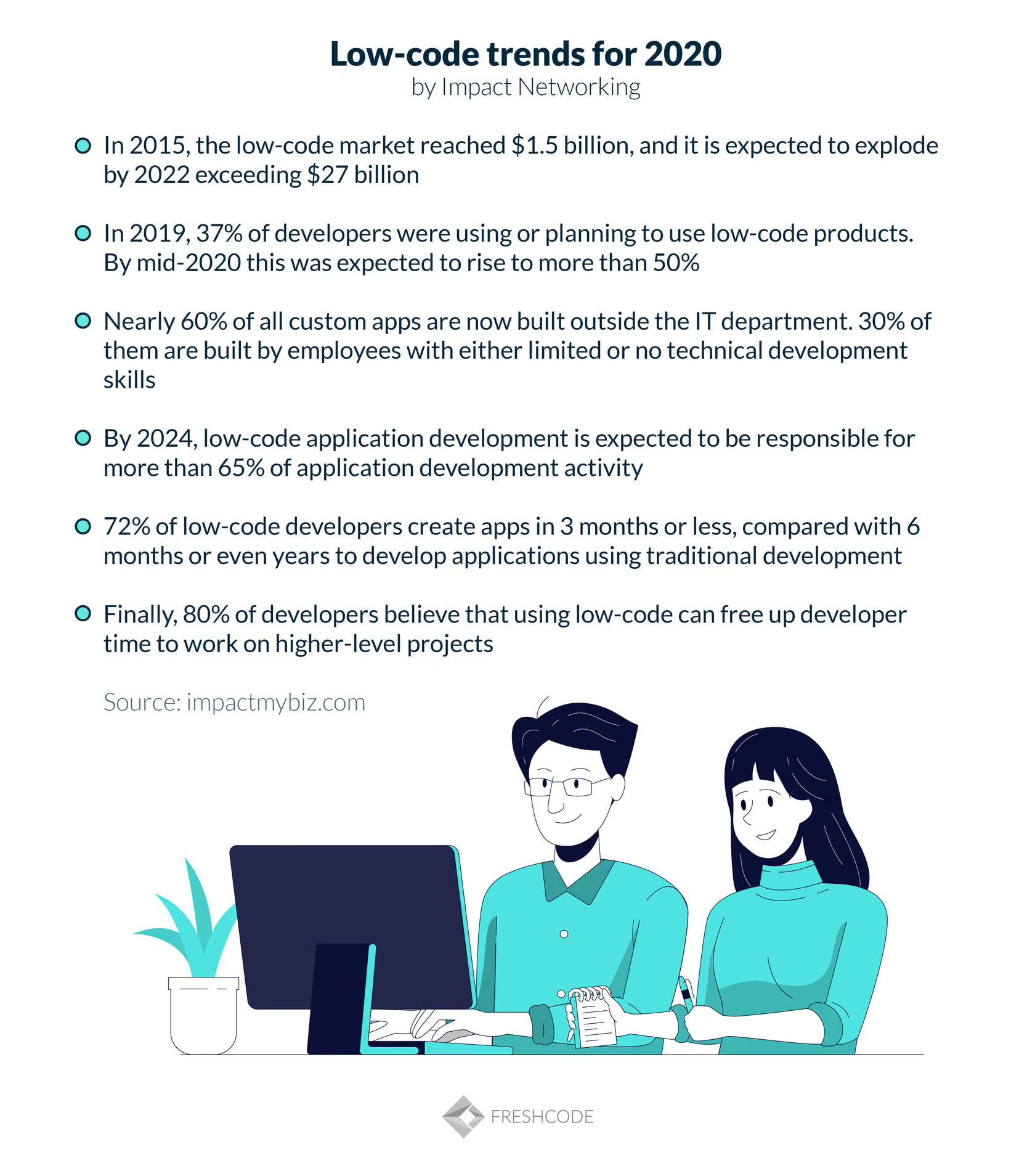
In 2022, the low-code market reached $22.5 billion, expected to grow continuously, exceeding $94 billion by 2028. And while 60% of the apps are now built outside the IT departments, even software engineers rely on low-code solutions. According to Gartner, the number of adopters among IT professionals is supposed to surpass 80% in 2026, up from 60% in 2020. Forrester expects low-code development to make up for 65% of all software development efforts by 2024. Unsurprisingly, low-code solutions are gaining favor with investors and boosting their valuations. For instance, Canva will earn $1.4 billion investment to help the company offer enterprise-level services, and its valuation jumped from $26 to $38 billion.
- Low-code market hit $22.5B in 2022, expected to exceed $94B by 2028—60% of apps now built outside IT departments, 80% of IT professionals will adopt by 2026 (up from 60% in 2020), Forrester expects 65% of all development by 2024
- Low-code vs no-code: No-code requires zero coding/technical expertise for simple standardized solutions by citizen developers with no customization, low-code uses same visual modeling/drag-and-drop but adds coding flexibility for IT professionals to speed development—categories increasingly connected as no-code adds coding and low-code reduces coding needed
- Development process comparison: Low-code (8 steps: specify requirements, select APIs, create UIs/data models/workflows, connect APIs, customize with code, test/feedback, deploy, support) vs traditional (14 steps including architecture/stack selection/wireframes/prototypes/coding UI/writing tests/defining models/business logic/views/implementation)—low-code cuts process in half by automating routine tasks
- Five key benefits: Lightning-fast results (72% ready in under 3 months vs 6-12 months traditional), seamless integration with existing systems/third-party services, significant savings (developers focus on high-level tasks, 200%+ ROI increase), access to cutting-edge technology (containers/microservices without architecture planning), defaults to great UX (outstanding templates for ease of use/intuitive navigation)
- What you can build: Internal apps (task boards, messaging, hardware tracking to automate processes), consumer-grade apps (customer portals, rating systems, immersive experiences), legacy app modernization (replace/improve existing ERP/CRM with seamless integration)
Low-code vs. no-code
No-code development requires zero lines of code and no technical expertise. Citizen developers or enterprise power users can make most of the no-code platforms to create simple, standardized solutions for their daily problems. With no coding, there's little to no chance of customization or complex features.
Low-code development relies on the same visual modeling principle and drag-and-drop interface as no-code platforms but introduces increased flexibility thanks to coding capabilities. While low-code platforms may seem a bit overcrowded with features for citizen developers, IT professionals can successfully use them to speed up the development process.
Despite their differences, these two categories are getting increasingly connected. No-code platforms offer coding capabilities, while low-code solutions reduce the amount of coding necessary. Considering their broad capabilities and user pool, let's focus on low-code platforms for this overview.
The low-code development process
Don't think low-code software means developers are no longer necessary. Think of it as the next step to the development automation that takes care of all the routine, mundane tasks and frees up the engineers' time for creative and complex tasks that give the finished product that much-needed oomph.
Let's compare the low-code development process to the traditional workflow, and you'll instantly see the advantages.
Low-code development:
1. Specify system requirements
2. Select third-party APIs
3. Create UIs, data models, workflows
4. Connect the chosen APIs
5. Customize the app with hand-written code
6. Test and collect user feedback
7. Deploy to production
8. Support via regular updates
Traditional development:
1. Specify system requirements
2. Devise app's architecture
3. Select technology stack, third-party APIs
4. Design wireframes and prototypes
5. Code the user interface
6. Write the failing tests
7. Define the models and connect them to data stores
8. Define and code the business logic
9. Create views to provide and receive JSON data from front-end
10. Implement the UI and workflow
11. Connect the chosen APIs
12. Test until the success criteria are met
13. Deploy to production
14. Maintain via regular updates
As you can see, the traditional development process is twice as long, and the majority of steps require manual input by software engineers. While their efforts are crucial at the decision-making stage, the routine tasks can and should be taken care of by low-code solutions.
Low-code/no-code platforms features & capabilities
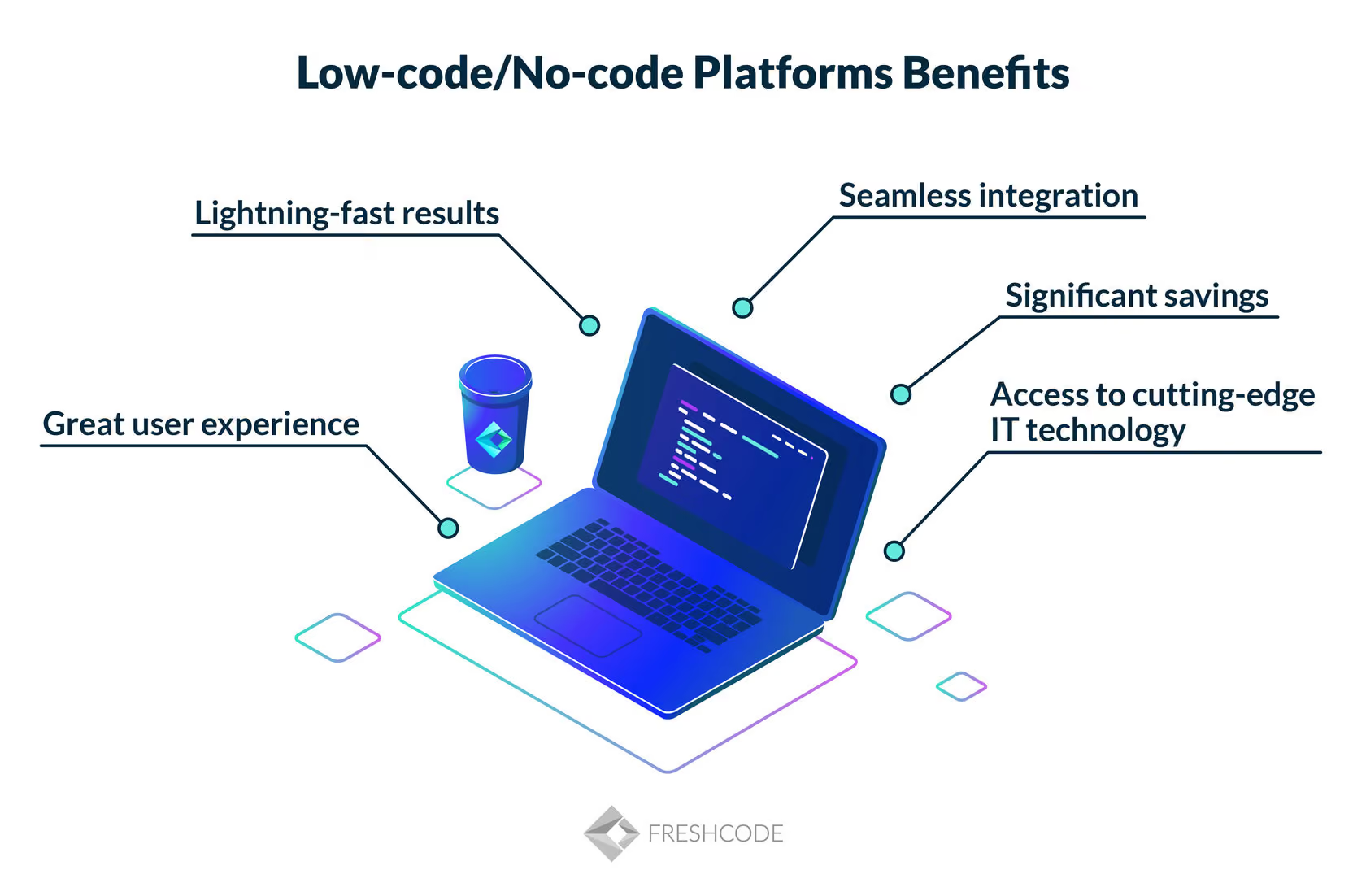
Low-code development might not replace a team of full-stack software engineers for now, but it can greatly assist in their efforts and bring multiple benefits to the table. Let's review just how much you win by implementing a low-code/no-code approach:
What apps can you create with low-code?
The beauty of low-code is that you can do almost anything an IT vendor may offer. Startups, SMBs, and enterprises usually rely on low-code platforms to develop:
The great future of low-code development
Low-code development is not just about the drag-and-drop interface. It's an unstoppable shift in the way we create business and consumer applications, and it is bound to gain even more traction in the coming years. Low-code development comes with multiple benefits you can reap by selecting the most suitable application platform and taking your business into the digital age, empowering every employee to create internal and customer-facing apps. Low code is about getting things done better, faster, and cheaper!
FAQ
What Is the Best Low-code Tool?

As we've discussed above, every low-code platform has its benefits, so there's no one-size-fits-all solution. Consider your needs and use cases, IT expertise, and budget before settling on one. And if you have no idea where to begin, Freshcode Portal is a great starting point.
How Does Low-code Affect Digital Transformation?
Low-code development is an invaluable asset for your digital transformation efforts. Empowering your employees to create internal apps is bound to improve efficiency, reduce the number of mistakes, and ultimately enhance customer experience leading to profit growth.
How to Build an App Without Code?
First, you'll need a good idea of what you want the app to do. Then, choose a no-code/low-code platform and use the lessons and tutorials to learn your way around. Use the drag-and-drop interface to build the functionality and deploy the finished product. It may take you at least a couple of weeks to learn the ins and outs of the platform and complete your project.
What Value Does Low-code & No-code Bring to the Business?
It's challenging to quantify the business value, as there are
plenty of things you can gain by implementing low-code
development. The time and money savings on developing new products
are obvious. However, you will enjoy the overall increased
efficiency and improved communication among the employees. Lower
expenses, new revenue streams, and even increased creativity among
the software engineers may also be the side effects of low-code
adoption.
Any questions please reach out
via LinkedIn, or
fill the form on our website
to get a free consultation.

with Freshcode